
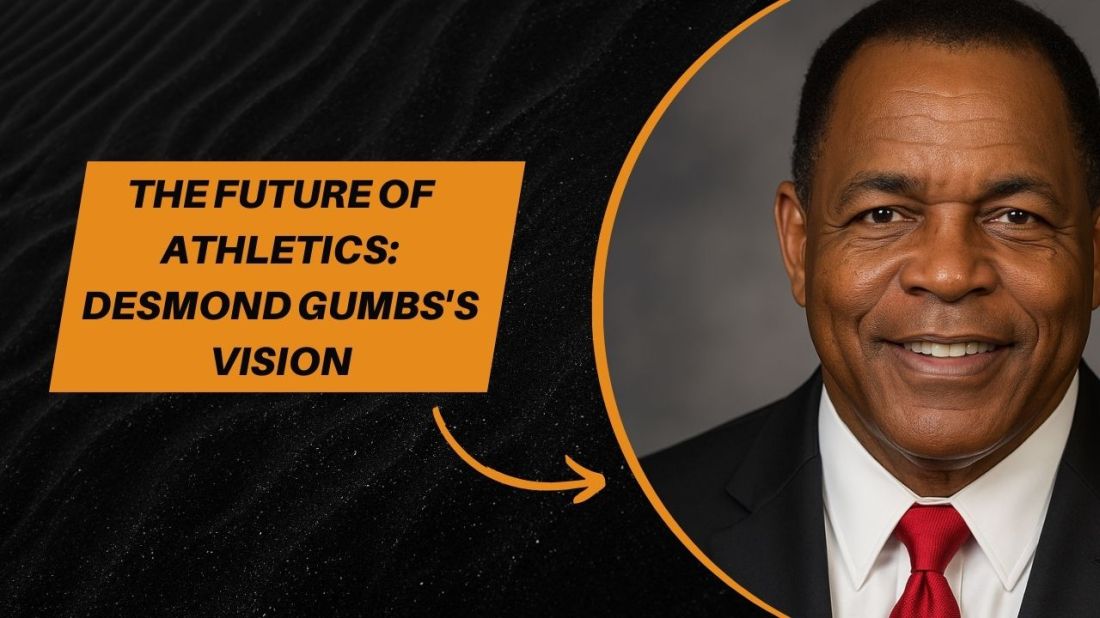
What makes a great athlete? In a world captivated by statistics, highlight reels, and championship titles, it’s easy to believe the answer lies solely in physical prowess: being the strongest, the fastest, or scoring the most points. But Desmond Gumbs invites us to look deeper. He sees the field, the court, and the track as giant classrooms for life, powerful arenas where the true goal is learning to be a better person, not just a better player. As a top Life coach and motivational speaker, a seasoned Sports Coach, and a forward-thinking Athletic Director, he has cultivated a special vision for sports. He wants to build an Athletic Program that doesn’t just build stronger bodies, but one that helps athletes grow strong on the inside, forging resilience, character, and a powerful sense of self.
Think of building a person like building a house. You need more than just strong walls. You need a solid foundation, a sturdy roof, and windows to let the light in. For an athlete, physical strength is important, but so is having a sharp mind, a kind heart, and a commitment to learning in school. Desmond Gumbs’s philosophy is rooted in a simple but profound truth: when an athlete is happy, healthy, and confident in all parts of their life, they perform better. His big idea is a paradigm shift for modern athletics: to stop focusing only on the scoreboard and start focusing on helping every single athlete win at the game of life.
The Architect of Culture: Redefining the Athletic Director
Beyond Budgets and Schedules
Traditionally, the role of an Athletic Director has been viewed through an administrative lens, centered on managing budgets, scheduling games, ensuring facility upkeep, and navigating the complex web of compliance. While these duties are essential for any functional program, Desmond Gumbs sees this as merely the starting point. He believes the modern Athletic Director must evolve into the main culture coach; the chief architect of the program’s entire environment. This leader is responsible for intentionally designing and nurturing a culture that is positive, supportive, and empowering for every person involved, from the star quarterback to the newest member of the coaching staff.
Building a Supportive Ecosystem
Desmond uses his unique skills as a Life coach and motivational speaker to turn this vision into reality. He believes the director must be a visible and approachable leader, not a distant figure in an office. Imagine an Athletic Director who regularly attends practices for all sports, who hosts town hall meetings where student-athletes can voice their concerns, and who knows players by their names and their stories, not just their jersey numbers. This hands-on approach builds a foundation of trust and makes the Athletic Program feel less like a collection of separate teams and more like a unified family. This leader actively builds bridges with academic departments, creating a network of support that ensures athletes have the resources they need to excel in the classroom. This kind of leadership creates a powerful ripple effect, where a culture of respect and mutual support becomes the standard.
The Mentor in the Trenches: The Evolving Role of the Coach
From X’s and O’s to Life Lessons
To Desmond Gumbs, a coach is one of the most influential teachers a young person will ever have. A great Sports Coach does far more than design plays or teach technique; they teach invaluable lessons that will serve their players for the rest of their lives. They instill discipline through the daily routine of practice, teamwork through the shared pursuit of a common goal, and resilience by guiding the team through the inevitable ups and downs of a competitive season.
Desmond challenges every Sports Coach to recognize and embrace their role as a life mentor. He encourages them to see every moment, a tough loss, a disagreement between teammates, a player struggling with confidence, as a teachable moment. How does a team respond to a controversial call from a referee? That’s a lesson in emotional control. How do players support a teammate who made a critical error? That’s a lesson in compassion and loyalty. By intentionally framing these experiences as life lessons, coaches can help their players develop the emotional intelligence and character needed to navigate the world. This approach transforms the Athletic Program into a powerful forge for leadership.
Investing in the Mentors
To create these kinds of coaches, Desmond advocates for a deep investment in their professional development. This training goes beyond coaching clinics and strategy sessions. It focuses on the human side of coaching: communication skills, emotional intelligence, conflict resolution, and mental health awareness. A coach who is equipped to recognize the signs of anxiety or depression in a player is infinitely more valuable than one who only knows how to run a specific offense. By investing in the growth of the coaches, an Athletic Program ensures that its most important leaders are fully prepared to mentor the next generation.
The Final Frontier: Prioritizing Mental and Emotional Wellness
Shattering the Stigma of ‘Toughness’
Here’s one of the most crucial and revolutionary parts of Desmond Gumbs’s vision: taking care of athletes’ thoughts and feelings. For generations, the culture of sports has promoted a narrow and often harmful definition of “toughness,” one that encourages athletes to hide their pain, suppress their emotions, and never show weakness. Desmond knows that true strength isn’t about hiding your struggles; it’s about having the courage to face them. He understands that the brain is like any other muscle in the body; it can get injured, it can get tired, and it needs proper care and training to perform at its best. His goal is to make talking about mental health as normal and accepted as getting treatment for a sprained ankle.
Proactive Tools for Mental Fitness
This means building an Athletic Program with real, accessible support. It’s not enough to simply provide a phone number for a counseling center. It means integrating mental wellness into the daily life of the program. This includes hosting workshops that teach practical skills for managing stress, dealing with performance anxiety, and building unshakeable confidence. As a Life coach and motivational speaker, Desmond knows the immense power of the mind. He wants to equip every athlete with a toolbox of mental skills, such as visualization, where they mentally rehearse success, and positive self-talk, which teaches them to become their own biggest cheerleader instead of their own worst critic. By making it safe and normal to talk about mental wellness, Desmond Gumbs helps athletes become stronger all around. Because a happy, confident, and mentally fit athlete isn’t just a better player; they’re a healthier and more resilient person, ready for a lifetime of success.
 Desmond Gumbs: Head Football Coach at Lincoln University, California