
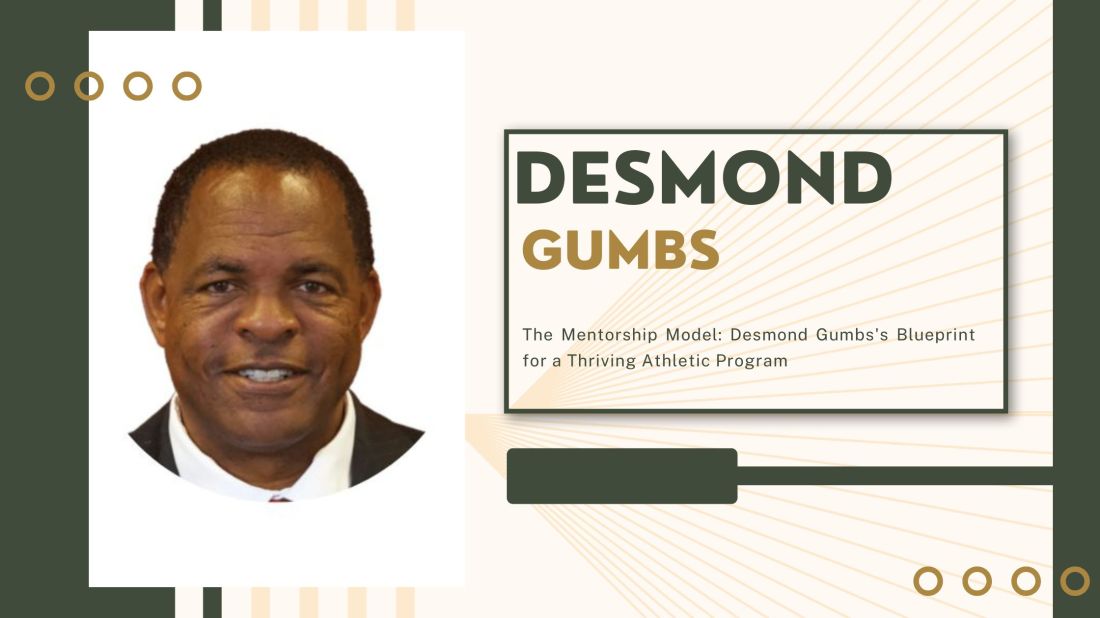
In an era where youth sports often prioritize trophies over character development, a fundamental shift is taking place in how we approach athletic leadership. The most successful programs are discovering that lasting impact extends far beyond the final score on any scoreboard. At the forefront of this transformation stands Desmond Gumbs, whose innovative approach as an Athletic Director has redefined what it means to build a truly successful athletic program.
Desmond Gumbs represents a new generation of athletic leadership, one that understands the profound responsibility that comes with shaping young athletes. His methodology transcends traditional program management, embracing what he calls the “mentorship model” – a comprehensive approach that views every interaction as an opportunity to develop character alongside athletic prowess. This exploration of Desmond Gumbs’s work as an Athletic Director reveals how his mentorship-centered philosophy creates athletic programs that cultivate not just championship teams, but well-rounded individuals prepared for lifelong success.
Beyond the Scoreboard: The Philosophy of Desmond Gumbs
The foundation of any transformative athletic program begins with philosophy, and Desmond Gumbs has built his approach on a simple yet profound principle: true athletic success emerges from character development, life skills acquisition, and personal growth that extends far beyond the playing field. This understanding stems from his unique background that combines athletic administration with life coaching and motivational speaking – experiences that have shaped his distinctive perspective as an Athletic Director.
Where traditional administrators might focus primarily on logistics and performance metrics, Desmond Gumbs operates from a fundamentally different paradigm. He doesn’t merely manage schedules and budgets; he inspires potential in every individual within his athletic program. Rather than simply hiring qualified sports coaches, he empowers leaders who understand their role in shaping future citizens. This distinction represents the core of his mentorship model.
The mentorship model, as conceived by Desmond Gumbs, encompasses multiple dimensions of development. It includes intensive one-on-one guidance between coaches and athletes, team-wide workshops focused on life skills and character building, and the cultivation of a supportive culture where peer mentorship flourishes naturally. This comprehensive approach recognizes that today’s student-athletes face unprecedented challenges – from academic pressures and social media influences to mental health concerns and uncertainty about life after sports.
By integrating his expertise as a life coach and motivational speaker into his role as Athletic Director, Desmond Gumbs has created an athletic program that serves as a laboratory for human development. His approach acknowledges that the lessons learned through sports – discipline, perseverance, teamwork, and resilience – become most powerful when explicitly connected to life beyond athletics.
Building Blocks of a Thriving Athletic Program: Gumbs’s Strategies
The practical application of Desmond Gumbs’s mentorship model manifests through carefully designed strategies that address every aspect of the athletic program experience. Understanding that theory without implementation remains merely aspirational, his approach as Athletic Director focuses on creating systematic support structures that make mentorship an integral part of daily operations.
Comprehensive Athlete Development
Academic excellence forms the cornerstone of Desmond Gumbs’s athletic program philosophy. Recognizing that athletic careers are finite while education creates lifelong opportunities, his program implements robust academic support systems. These include mandatory study halls with dedicated tutoring resources, academic advisors specifically assigned to work within the athletic program, and regular monitoring systems that ensure no athlete falls through the cracks academically.
Character and leadership development receive equal attention through structured initiatives that challenge athletes to grow beyond their comfort zones. Desmond Gumbs has established leadership workshops that rotate throughout the competitive season, community service requirements that connect athletes to their broader community, and sportsmanship emphasis programs that reinforce positive values during competition. These initiatives reflect his understanding that every sports coach within the athletic program has the unique opportunity to develop leaders who will influence society long after their competitive careers end.
Life skills integration represents perhaps the most innovative aspect of his approach. The athletic program under Desmond Gumbs actively prepares athletes for professional success through practical workshops covering financial literacy, interview skills, professional networking, and career exploration. This preparation acknowledges that while few athletes will compete professionally, all will need to navigate adult responsibilities successfully.
Coach and Staff Empowerment
Understanding that the sports coach serves as the primary mentor in daily athlete interactions, Desmond Gumbs, as the Athletic Director, invests heavily in developing his coaching staff. His approach to mentoring coaches includes regular professional development opportunities, fostering collaborative environments where coaches share best practices, and encouraging innovative training methods that align with the program’s mentorship philosophy.
The support systems he establishes ensure that coaches have both the resources and the authority to effectively mentor their athletes. This includes providing access to mental health professionals, academic support specialists, and life skills educators who can supplement the guidance that coaches provide. By empowering his staff, Desmond Gumbs creates a multiplier effect where his mentorship model influences every level of the athletic program.
Program Infrastructure and Culture
The mentorship model influences every aspect of program culture under Desmond Gumbs’s leadership as Athletic Director. Open communication becomes the norm, with regular feedback sessions between athletes, coaches, and administrators. Mutual respect characterizes interactions at all levels, creating an environment where individuals feel safe to take risks and learn from mistakes.
The physical infrastructure of the athletic program also reflects this philosophy. Dedicated spaces for academic support, quiet areas for counseling and mentoring conversations, and communal areas that encourage positive social interaction all contribute to an environment where mentorship can flourish naturally. These facilities demonstrate Desmond Gumbs’s understanding that effective mentorship requires intentional space design that supports meaningful relationships.
The Impact: Realizing Potential
The true measure of any athletic program lies not in the trophies displayed in cases, but in the lives transformed through participation. Under Desmond Gumbs’s leadership, his athletic program has generated compelling evidence that the mentorship model creates lasting positive change that extends far beyond competitive achievements.
Success stories emerge regularly from athletes who have participated in programs guided by Desmond Gumbs’s mentorship philosophy. Graduation rates consistently exceed institutional averages, with many athletes pursuing advanced degrees and professional careers that leverage the leadership skills developed through their athletic experience. Former athletes frequently return to share how the life skills emphasis and character development they received prepared them for challenges they never anticipated facing.
The program’s impact extends beyond individual success stories to encompass broader measures of community engagement and institutional pride. Teams demonstrate enhanced cohesion and resilience, performing better under pressure and supporting each other through adversity. The athletic program has become a source of positive visibility for the institution, attracting prospective students who value character development alongside academic excellence.
Perhaps most significantly, the mentorship model implemented by Desmond Gumbs has created a self-perpetuating culture of positive influence. Older athletes naturally mentor younger teammates, sports coaches report higher job satisfaction and retention rates, and parents consistently express appreciation for the holistic development their children receive through program participation.
The feedback from various stakeholders reinforces the effectiveness of this approach. Athletes report feeling more prepared for post-graduation challenges, parents observe increased maturity and responsibility in their children, and institutional leadership recognizes the athletic program as a model for student development across the campus.
Conclusion
The mentorship model pioneered by Desmond Gumbs represents more than just an innovative approach to athletic administration – it embodies a blueprint for developing human potential through sports participation. His unique integration of life coaching expertise and motivational speaking skills into his role as Athletic Director has created an athletic program that serves as a catalyst for comprehensive personal development.
As athletic programs across the country grapple with questions about their role in student development, Desmond Gumbs offers a compelling answer. His approach demonstrates that athletic programs can simultaneously pursue competitive excellence while prioritizing character development, academic achievement, and life preparation. The mentorship model proves that the traditional dichotomy between winning and developing people represents a false choice.
Looking toward the future of athletic development, Desmond Gumbs’s work as an Athletic Director suggests that the most successful programs will be those that embrace their responsibility to develop complete individuals. His athletic program serves as a beacon for institutions seeking to maximize the transformative potential of sports participation, proving that mentorship-centered leadership creates lasting positive impact that extends far beyond any single season or championship.
 Desmond Gumbs: Head Football Coach at Lincoln University, California