
The Future of Sports: Insights from Athletic Director Desmond Gumbs

Desmond Gumbs

As a life and sports coach, Desmond Gumbs has had a front-row seat to the moments that define a person’s journey. He has seen gifted athletes crumble under pressure and underdog teams achieve legendary victories. He has worked with executives who felt lost and students who were unsure of their path, helping them find a new level of clarity and drive. Through all these experiences, one truth has been forged in the fires of both victory and defeat: success isn’t accidental. It’s designed. The architects of success, the champions in every field, all start with the same tool: a powerful blueprint built on effective goal setting strategies.

Many people think of goals as vague wishes—”to be healthier,” “to be more successful,” or “to be happy.” These are fine starting points, but they are not goals. They are dreams without a deadline, energy without direction. A true goal is a target one can see, aim for, and hit. It’s the difference between wandering in the wilderness and following a map to a hidden treasure. The right goal setting strategies provide that map, turning the deepest aspirations into an actionable plan for achievement.

Why Most Goals Fail Before They Even Start

Before building the blueprint, it’s essential to clear the land. Why do so many New Year’s resolutions and ambitious plans fizzle out by February? It usually comes down to a few common mistakes:

  • Lack of Clarity: The goal is too vague. “Get in shape” has no finish line.
  • No Emotional Connection: The goal doesn’t connect to a deeper purpose or “why.” Without that fire, motivation dies when challenges arise.
  • Overwhelming Scope: The goal is so massive that the first step seems impossible, leading to procrastination.
  • No System for Tracking: Without measuring progress, it’s easy to feel like you’re not moving forward, even when you are.

Recognizing these pitfalls is the first step toward avoiding them. The next is to build a framework that works.

The Foundation: SMART Goals Reimagined for Champions

Many have likely heard of SMART goals, but it’s time to look at them through the lens of a coach. This isn’t just a corporate acronym; it’s a training regimen for success.

  • Specific: Don’t just say “I want to grow my business.” Get specific. “Acquire three new high-value clients for the consulting business.” See the difference? One is a wish; the other is a mission.
  • Measurable: How will success be measured? “Increase monthly revenue by 15%.” This provides a tangible metric that can be tracked, analyzed, and celebrated.
  • Achievable: This is crucial. A goal should stretch you, not break you. A rookie quarterback doesn’t aim to win the MVP in their first season. They aim to master the playbook, improve their completion percentage, and lead their team effectively. A goal should be a challenging step forward, not a superhuman leap.
  • Relevant: This is the “why.” Does this goal truly matter? Does it align with core values and the long-term vision for your life? If a goal isn’t relevant to what is fundamentally wanted, it will be abandoned at the first sign of hardship. “Increase revenue by 15% to provide more security for my family and invest in personal development.” That’s a goal with a soul.
  • Time-Bound: “Acquire three new high-value clients and increase monthly revenue by 15% within the next six months.” A deadline creates urgency and a clear timeline for action. It transforms a passive goal into an active pursuit.

Beyond SMART: The Athlete’s Edge in Goal Setting

The SMART framework is the foundation, but champions add extra layers to their blueprint. This is where the process is infused with the intensity and focus of elite sports.

1. The Power of Visualization

Before a sprinter explodes from the blocks, they have already run the race in their mind a thousand times. They’ve visualized every stride, the feeling of the tape breaking across their chest, the roar of the crowd. Visualization is not daydreaming; it’s mental rehearsal.

Spending five minutes every morning visualizing the successful outcome of a goal is a powerful practice. One shouldn’t just see it; one must feel it. What emotions come with achieving it? Pride? Joy? Relief? Connecting emotionally to the outcome primes the brain for success and makes the path to achieving it feel more familiar and attainable.

2. Break It Down into Plays

A football game isn’t won in one heroic play. It’s won through a series of smaller, well-executed plays that move the ball down the field. A big, time-bound goal is the touchdown. The “plays” are the daily and weekly actions that must be taken to get there.

If the goal is to write a book in a year, the weekly play might be to write 1,500 words. The daily play might be to write for 30 minutes before checking email. These small, consistent actions build momentum and make the larger goal feel manageable.

3. Embrace the “Game Film” Review

Teams don’t just play the game; they study it. After every performance, they review the film to see what worked and what didn’t. The same discipline must be applied to goals.

Set aside time each week to review progress. Were the plays executed? What obstacles were faced? What was learned? This regular check-in allows for strategy adjustments, celebration of small wins, and staying engaged with the process. One shouldn’t wait until the deadline to realize they’ve gone off-course.

Frequently Asked Questions (Your Coaching Corner)

Q1: How many goals should be set at once?

A: Coach Gumbs recommends focusing on 1-3 major goals at a time. Trying to chase too many rabbits means you’ll catch none. Focus energy on what’s most important right now. New goals can always be set after the current ones are achieved.

Q2: What should be done if motivation is lost?

A: Motivation is fleeting; discipline is reliable. When motivation wanes, it’s time to reconnect with the “why.” Re-read the Relevant part of the SMART goal. Remind yourself why this matters so much. Then, fall back on the daily plays. The act of doing, even without the feeling, is what creates momentum and often brings motivation back.

Q3: A big goal feels terrifying. How does one start?

A: By focusing only on the first step. A mountain isn’t climbed by staring at the summit; it’s climbed by focusing on where to place the foot next. Identify the absolute smallest, easiest action that can be taken toward the goal and do it today. That small win will build the confidence needed for the next step.

Your First Step Starts Now

The difference between a dream and a reality is a plan. The goal setting strategies outlined here are a personal blueprint for success. They are tested on the field, in the boardroom, and in the lives of thousands of people who decided they wanted more.

But a blueprint is useless if it stays rolled up on a shelf. The journey begins with a single, decisive action. So, right now, take out a piece of paper or open a new document. Write down one goal that truly matters. And then, transform it using the SMART framework. Define the “why.” Break it down into the first few plays.

This is the moment. The whistle has blown. It’s time to get in the game. What are you waiting for?
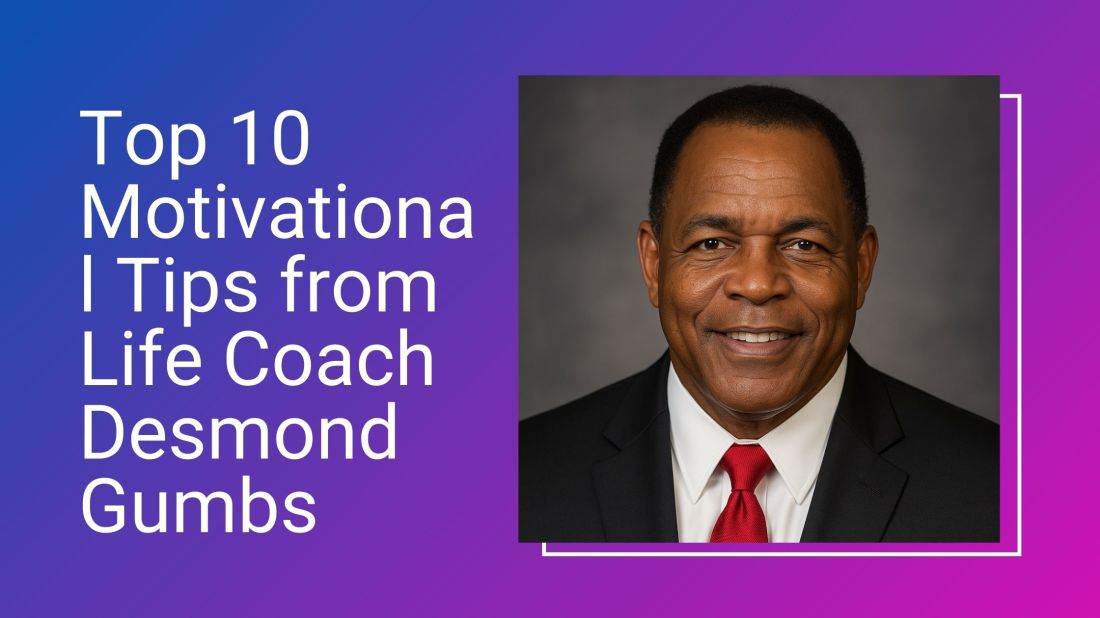
Top 10 Motivational Tips from Life Coach Desmond Gumbs

Desmond Gumbs

Motivation. It’s the spark that ignites action, the fuel that drives us toward our goals. Yet, for many, it can feel like a flickering flame, bright one moment, nearly extinguished the next. For renowned life coach and motivational speaker Desmond Gumbs, motivation isn’t a magical gift but a skill that can be built, sustained, and made an unshakable part of daily life.

Through years of helping thousands, from elite athletes to corporate leaders, Desmond Gumbs has developed a robust framework for achieving excellence. His journey as a Sports Coach and mentor has revealed that the principles of high achievement are universal. These aren’t just feel-good platitudes; they are battle-tested strategies that have proven effective. For anyone looking to unlock their potential and build unstoppable momentum, here are the top 10 motivational tips from Desmond Gumbs‘ playbook.

1. Define Your “Why” with Unshakable Clarity

A core principle in Gumbs’ coaching is that before you can figure out how to achieve something, you must know why you want it. This “why” is the ultimate purpose, the emotional anchor that holds you steady when challenges arise. It could be providing a better life for your family, achieving personal freedom, or making a tangible impact on a community.

In his work designing and leading an Athletic Program, Gumbs establishes the collective “why” before ever discussing a training regimen. The team understands the deep reason they endure gruelling practices: to represent their school with pride, push their limits, and achieve something great together.

Action Step: Gumbs advises taking 30 minutes, free of distractions, to write down what you truly want to achieve. Then, ask “why” five times, digging deeper with each answer to find the emotional core that will fuel your journey.

2. Break Down Your Everest into Climbable Hills

A massive goal can be paralyzing. Desmond Gumbs teaches that the secret to conquering a mountain-sized goal is to break it down into small, manageable, and actionable steps. Instead of a vague goal like “start a successful business,” he would advise a concrete first step: “This week, I will research my target market for three hours and draft a one-page business plan.”

A Sports Coach like Gumbs doesn’t tell a player to “become the best.” They focus on specifics: “Let’s improve your free-throw percentage by 2% this month.” By focusing on small, incremental progress, individuals build momentum and confidence. Each small win serves as a dose of motivation for the next step.

3. Celebrate Every Single Small Victory

In the pursuit of big goals, it’s common to overlook the progress made along the way. Gumbs considers this a huge mistake. He emphasizes that celebrating small wins is crucial for maintaining long-term motivation. Completing a task or reaching a mini-milestone triggers the release of dopamine in the brain, creating a positive feedback loop: you do something good, you feel good, and you become more motivated for the next challenge. The lesson is not to wait until the finish line to feel proud, but to celebrate finishing the first mile.

4. Visualize Success with Intense Detail

Top athletes have long used visualization, a technique central to Gumbs’ coaching. He teaches that this is more than just daydreaming; it’s the practice of creating a vivid mental image of you achieving your goals by engaging all the senses. What does it feel like to get that promotion? What does it sound like when the crowd cheers? What do you see when you achieve your financial goal?

As Desmond Gumbs guides his clients, he turns this into a daily practice. By repeatedly visualizing success, a person can train their brain to believe the outcome is possible, building the neural pathways that help recognize opportunities and maintain focus.

5. Reframe Failure as Essential Feedback

Fear of failure is one of the biggest motivators. Gumbs’ philosophy is centered on changing one’s relationship with failure. He teaches that failure is not a reflection of a person’s worth; it is simply data and feedback on what didn’t work.

Every great athlete has lost games, and every successful entrepreneur has had failed ideas. What sets them apart is their ability to extract the lesson, adjust their strategy, and get back in the game. When something doesn’t go as planned, Gumbs advises against saying “I failed,” but instead asking, “What did I learn?”

6. Curate a Supportive Environment

A well-known adage is that you are the average of the five people you spend the most time with. Gumbs believes deeply in this, teaching that one’s environment, including friends, family, and colleagues, has a profound impact on motivation and mindset. Being surrounded by negativity and doubt makes it incredibly difficult to stay positive and driven.

His advice is to seek out people who inspire, challenge, and believe in your potential. Finding a mentor, joining a mastermind group, or simply being more intentional about who you give your time to creates a strong support system that acts like a tailwind, making the journey forward feel easier.

7. Prioritize Your Physical and Mental Well-being

“You can’t pour from an empty cup” is a phrase often heard in Gumbs’ coaching sessions. Pushing oneself to the point of burnout is not a sustainable approach to achieving success. Motivation is closely tied to both physical and mental health. This means prioritizing sleep, a balanced diet, regular exercise, and time for mental relaxation.

In his work with athletes, the recovery plan is just as important as the training plan. The same applies to life. Gumbs stresses that people are far more motivated, creative, and resilient when operating from a place of strength and wellness.

8. Master the Art of Daily Discipline

Desmond Gumbs makes a clear distinction: Motivation gets you started, but discipline keeps you going. He teaches that motivation is an emotion that ebbs and flows, and therefore cannot be relied upon daily.

Discipline, on the other hand, is about establishing habits and routines that are consistently followed, regardless of one’s emotions or mood. It’s about showing up even on the days you don’t want to. A disciplined person can achieve incredible things because they are not at the mercy of their fleeting moods. His method is to start by building one small, positive habit and sticking to it for 30 days to develop the discipline muscle.

9. Intentionally Step Outside Your Comfort Zone

The comfort zone is a place of safety, but, as Gumbs notes, nothing ever grows there. Proper growth and breakthrough moments happen when you challenge yourself and step into the unknown. Consistently pushing boundaries builds self-confidence and resilience.

He suggests starting small: take a different route to work, try a new workout, or speak up in a meeting. Each time a person does something slightly scary, they expand the edges of their comfort zone and prove to themselves that they are more capable than they thought they were.

10. Find a Coach or Mentor

Even the best athletes in the world have coaches. Gumbs highlights this to make a crucial point: a coach can see your blind spots. They offer a fresh perspective, provide accountability, and equip you with strategies to excel. A great mentor or coach can accelerate progress tenfold.

As a life coach and motivational speaker, Desmond Gumbs’ greatest joy comes from helping people see the greatness within themselves. He firmly believes that investing in guidance from someone who has been where you want to go is one of the most powerful moves for personal and professional growth.

Your Journey Starts Now

Motivation isn’t a destination; it’s a daily practice. By integrating Desmond Gumbs’ strategies into your life, you can build a robust and sustainable engine for success. Pick one or two of these tips that resonate and start implementing them today. The path to achieving great dreams is built one disciplined, motivated step at a time.