Desmond Gumbs on future trends in youth sports coaching for 2025 and beyond.

Desmond Gumbs

The world of youth sports is at a crossroads. For decades, the model has been top-down, performance-driven, and increasingly specialized. The result? Sky-high rates of burnout, overuse injuries, and a generation of young athletes who leave their sport by age 13, feeling exhausted and devalued.

So, what’s next? Where is the puck heading?

To find out, I sought the perspective of Desmond Gumbs, a visionary sports coach who has also built a powerful reputation as a life coach and motivational speaker. His unique position, with one foot in elite athletics and the other in holistic personal development, gives him a remarkable vantage point from which to see the future.

In our recent conversation, Gumbs outlined a seismic shift. The future of youth sports, he argues, is not about increasing drills, pressure, or specialization. The future is about depth, deeper connections, greater self-awareness, and more holistic development. Here are the key trends Desmond Gumbs sees defining youth sports coaching for 2025 and beyond.

The Core Shift: From Performance-Only to Holistic Development

Before we dived into specific trends, Gumbs laid the groundwork for the entire conversation.

“For years, youth sports has been a ‘performance-first’ model,” he explained. “We ask, ‘How can we make this 12-year-old a better soccer player?’ The question for 2025 is, ‘How can we use soccer to make this 12-year-old a better human?'”

This, he states, is the fundamental evolution. The goal is no longer just to build athletes; it’s to build people through the sport of athletics. The focus is shifting from a child’s stats to their state. This “empowerment” and “holistic growth” mindset is the foundation for every trend that follows.

Trend 1: The ‘Mental Skills Coach’ Becomes Mainstream

The biggest and most immediate trend Gumbs identifies is the democratization of mental skills training.

“We drill physical skills every single day. We run, we lift, we practice the play. But we treat the mental side as an afterthought, or something only for ‘problem’ athletes,” Gumbs said. “In the next five years, you will see mental-skills training integrated into every practice, at every level.”

What This Looks Like in Practice

This isn’t about hiring a team of sports psychologists. It’s about equipping the coach to be the first line of mental skills development.

  • Mindful Minutes: Gumbs predicts practices will start or end with 2-3 minutes of guided breathwork or mindfulness, teaching kids how to quiet “the noise” in their heads.
  • Failure Recovery Drills: Instead of punishing a mistake, coaches will create drills designed to cause failure, and then immediately coach the response to that failure. The skill being taught is resilience, not just the physical act.
  • Confidence Training: Coaches will move from “good job!”. This builds authentic, earned confidence.

The Gumbs Take

“We are finally realizing that the most important ‘muscle’ is the one between the ears,” he told me. “A-level physical skills with a C-level mindset is a C-level player. A-level physical skills with an A-level mindset? That’s a champion, on and off the field.”

Trend 2: Player-Led Cultures and the ‘Coach as Facilitator’

The “coach as dictator” model is dying, and Gumbs is here for it. The future, he says, is in collaboration and empowerment.

“My generation was taught to ‘respect the position’ of the coach. This generation is different. They ‘respect the person.’ And that respect must be earned through connection, not demanded through fear,” Gumbs explained. “The future coach is not a drill sergeant; they’re a facilitator.”

What This Looks Like in Practice

This trend is about shifting ownership from the coach to the players, a key tenet of Gumbs’ “empowerment” philosophy.

  • Player-Run Leadership Councils: Coaches will create small councils of players (not just captains) who meet regularly to discuss team culture, standards, and challenges.
  • “Designing the Drill”: Gumbs suggests coaches will present a problem (e.g., “We’re struggling with our transition defense”) and ask the team to help design a drill to fix it. “When they build it, they buy into it,” he says.
  • Peer Accountability: Instead of the coach being the sole enforcer, the team’s shared standards (which they helped create) become the benchmark.

The Gumbs Take

“When the team owns the standards, the coach’s job becomes 90% easier. You’re no longer the bad guy; you’re the guardian of their stated goals. This is a core principle in corporate team building, and it’s finally trickling down to the youth athletic program. It’s how you build real leaders.”

Trend 3: ‘Accessible Tech’ for Hyper-Personalization

Technology in sports isn’t new, but its application in youth sports will be. Gumbs isn’t talking about million-dollar “Whoop” labs. He’s referring to simple, accessible technology.

“The future isn’t about more data; it’s about meaningful data,” he said. “We’re moving away from ‘one-size-fits-all’ practice plans and toward hyper-personalized development, and simple tech is the bridge.”

What This Looks Like in Practice

  • Video Analysis Apps: Every kid has a smartphone. Coaches will use simple apps (such as Hudl Technique or iMovie) to have players film each other, analyze their own form in slow motion, and tag their own “wins” and “work.”
  • Simple Wellness Trackers: Not expensive wearables, but simple daily check-in forms (via Google Forms) where players log their sleep, nutrition, and stress levels.
  • Virtual Coaching: Using video calls for 10-minute check-ins, “mental game” homework, or personalized goal-setting sessions.

The Gumbs Take

Gumbs offers a critical warning here. “Technology must be a tool for connection, not a replacement for it. The data tells you what happened. You, the coach, must still connect with the athlete to find out why.” This blend of high-tech and “high-touch” is a hallmark of his results-driven, yet empathetic, style.

Trend 4: The ‘Life Coach’ Integration and Purpose-Driven Sport

This is the trend Desmond Gumbs is most passionate about, as it’s the very definition of his career.

“The lines between sports coach and life coach are blurring… and that’s a good thing,” he told me, leaning in. “Parents are no longer just paying for soccer lessons. They are paying for mentorship. They want to know that you are teaching their child about discipline, respect, goal-setting, and teamwork.”

What This Looks Like in Practice

This is the most profound shift, and it requires coaches to expand their own skillset.

  • Goal-Setting Workshops: Coaches will conduct “off-field” sessions where they teach players how to set S.M.A.R.T. goals, not just for the season, but also for their academic and personal lives.
  • The ‘Why’ Day’: Gumbs predicts that more teams will start their season not with drills, but with a ‘purpose’ meeting, defining why they play and what they want to represent.
  • Coach Training: An Athletic Director of a future-focused athletic program will provide their coaches with training in active listening, empathy, and having difficult conversations.

The Gumbs Take

“This is the big one,” Gumbs concluded. “The coach of the future understands that the ‘W’ in ‘Win’ also stands for ‘Wisdom.’ You are a life coach and motivational speaker, whether you have the title or not. You have a platform. The trend is that we are finally being asked to use that platform for something bigger than the game.”

Conclusion: The Future is Human

As we finished our conversation, the single thread running through every trend was clear. The future of youth sports is human.

It’s a move away from the industrial-age model of “break them down, build them up” and toward a connection-age model of “see them, connect with them, and empower them.”

For coaches, Desmond Gumbs’ vision is a call to action. It’s a challenge to grow beyond the playbook and embrace the role of mentor. The future coach isn’t the one with the most complex drills; it’s the one with the deepest connections. The one who, in 20 years, athletes will remember not for the championships they won, but for the person they helped them become.

Desmond Gumbs: Inspiring Lives Through Coaching, Leadership, and Motivation

In the world of sports and personal growth, few names shine as brightly as Desmond Gumbs. Known for his wisdom, vision, and leadership, he has earned admiration as both a life coach and a head football coach. His journey reflects an unwavering commitment to guiding individuals and teams toward excellence, inspiring countless people to unlock their potential.

A Visionary in Life Coaching and Motivation

Over the years, Desmond Gumbs has touched the lives of thousands through his life coaching and motivational speaking. With a gift for connecting deeply with people, he encourages individuals to face challenges with courage, set ambitious goals, and believe in their ability to succeed. His words of wisdom are rooted in real experiences, making his guidance both practical and inspiring.

What sets him apart is his genuine passion for bringing positive change to people’s lives. For many, his mentorship has been the spark that led them to rediscover their strengths and achieve remarkable growth. This dedication has positioned him as one of the most trusted and influential figures in the life coaching space.

Leadership on the Football Field

Alongside his achievements as a mentor, Desmond Gumbs also leads as the head football coach at Lincoln University, California. With years of coaching expertise, he is dedicated to making the football team stronger and more competitive with every season. His coaching philosophy goes beyond strategy; it is about building character, teamwork, and discipline.

Coach Gumbs believes that football is not just a sport but a powerful tool for shaping future leaders. By instilling values such as resilience, respect, and unity, he helps players succeed on the field while preparing them for success in life. His ability to shape athletes into champions reflects his passion for both the game and the people he mentors.

Building a Legacy of Excellence

As highlighted in Lincoln University’s athletics program, Desmond Gumbs has played a vital role in building a legacy of athletic excellence. From establishing strong foundations to nurturing a culture of teamwork, his contributions continue to uplift the university and inspire future generations of student-athletes.

His leadership is not just about short-term wins but about creating lasting impact. He envisions a program that empowers young athletes to embrace challenges with confidence and carry the values of discipline and determination into every aspect of their lives.

A Mentor for Life

The influence of Desmond Gumbs extends well beyond the football field. His holistic approach to coaching ensures that every individual he works with gains not just skills but also life lessons. Many of his athletes and mentees credit him with giving them the strength to pursue their dreams with clarity and purpose.

Conclusion

Through his work as a life coach, motivational speaker, and football coach at Lincoln University, Desmond Gumbs continues to inspire and guide countless individuals. His passion, vision, and leadership make him a role model for aspiring athletes and anyone seeking motivation in their personal journey.

With every speech, every practice, and every moment of mentorship, Desmond Gumbs is shaping champions—not only in sports but also in life.

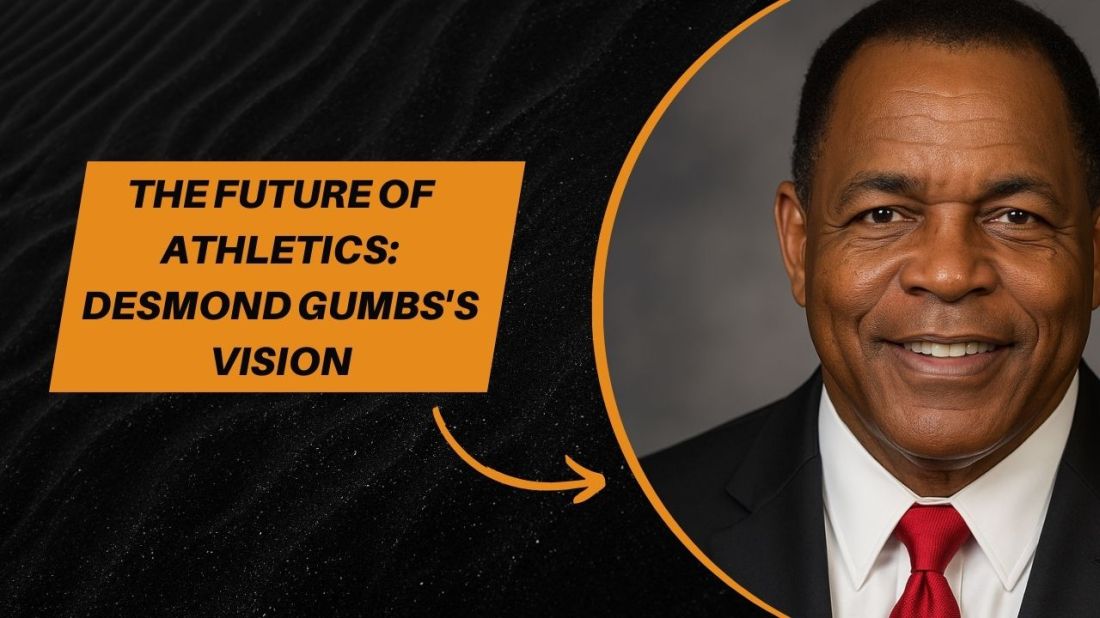
The Future of Athletics: Desmond Gumbs’s Vision

Desmond Gumbs

What makes a great athlete? In a world captivated by statistics, highlight reels, and championship titles, it’s easy to believe the answer lies solely in physical prowess: being the strongest, the fastest, or scoring the most points. But Desmond Gumbs invites us to look deeper. He sees the field, the court, and the track as giant classrooms for life, powerful arenas where the true goal is learning to be a better person, not just a better player. As a top Life coach and motivational speaker, a seasoned Sports Coach, and a forward-thinking Athletic Director, he has cultivated a special vision for sports. He wants to build an Athletic Program that doesn’t just build stronger bodies, but one that helps athletes grow strong on the inside, forging resilience, character, and a powerful sense of self.

Think of building a person like building a house. You need more than just strong walls. You need a solid foundation, a sturdy roof, and windows to let the light in. For an athlete, physical strength is important, but so is having a sharp mind, a kind heart, and a commitment to learning in school. Desmond Gumbs’s philosophy is rooted in a simple but profound truth: when an athlete is happy, healthy, and confident in all parts of their life, they perform better. His big idea is a paradigm shift for modern athletics: to stop focusing only on the scoreboard and start focusing on helping every single athlete win at the game of life.

The Architect of Culture: Redefining the Athletic Director

Beyond Budgets and Schedules

Traditionally, the role of an Athletic Director has been viewed through an administrative lens, centered on managing budgets, scheduling games, ensuring facility upkeep, and navigating the complex web of compliance. While these duties are essential for any functional program, Desmond Gumbs sees this as merely the starting point. He believes the modern Athletic Director must evolve into the main culture coach; the chief architect of the program’s entire environment. This leader is responsible for intentionally designing and nurturing a culture that is positive, supportive, and empowering for every person involved, from the star quarterback to the newest member of the coaching staff.

Building a Supportive Ecosystem

Desmond uses his unique skills as a Life coach and motivational speaker to turn this vision into reality. He believes the director must be a visible and approachable leader, not a distant figure in an office. Imagine an Athletic Director who regularly attends practices for all sports, who hosts town hall meetings where student-athletes can voice their concerns, and who knows players by their names and their stories, not just their jersey numbers. This hands-on approach builds a foundation of trust and makes the Athletic Program feel less like a collection of separate teams and more like a unified family. This leader actively builds bridges with academic departments, creating a network of support that ensures athletes have the resources they need to excel in the classroom. This kind of leadership creates a powerful ripple effect, where a culture of respect and mutual support becomes the standard.

The Mentor in the Trenches: The Evolving Role of the Coach

From X’s and O’s to Life Lessons

To Desmond Gumbs, a coach is one of the most influential teachers a young person will ever have. A great Sports Coach does far more than design plays or teach technique; they teach invaluable lessons that will serve their players for the rest of their lives. They instill discipline through the daily routine of practice, teamwork through the shared pursuit of a common goal, and resilience by guiding the team through the inevitable ups and downs of a competitive season.

Desmond challenges every Sports Coach to recognize and embrace their role as a life mentor. He encourages them to see every moment, a tough loss, a disagreement between teammates, a player struggling with confidence, as a teachable moment. How does a team respond to a controversial call from a referee? That’s a lesson in emotional control. How do players support a teammate who made a critical error? That’s a lesson in compassion and loyalty. By intentionally framing these experiences as life lessons, coaches can help their players develop the emotional intelligence and character needed to navigate the world. This approach transforms the Athletic Program into a powerful forge for leadership.

Investing in the Mentors

To create these kinds of coaches, Desmond advocates for a deep investment in their professional development. This training goes beyond coaching clinics and strategy sessions. It focuses on the human side of coaching: communication skills, emotional intelligence, conflict resolution, and mental health awareness. A coach who is equipped to recognize the signs of anxiety or depression in a player is infinitely more valuable than one who only knows how to run a specific offense. By investing in the growth of the coaches, an Athletic Program ensures that its most important leaders are fully prepared to mentor the next generation.

The Final Frontier: Prioritizing Mental and Emotional Wellness

Shattering the Stigma of ‘Toughness’

Here’s one of the most crucial and revolutionary parts of Desmond Gumbs’s vision: taking care of athletes’ thoughts and feelings. For generations, the culture of sports has promoted a narrow and often harmful definition of “toughness,” one that encourages athletes to hide their pain, suppress their emotions, and never show weakness. Desmond knows that true strength isn’t about hiding your struggles; it’s about having the courage to face them. He understands that the brain is like any other muscle in the body; it can get injured, it can get tired, and it needs proper care and training to perform at its best. His goal is to make talking about mental health as normal and accepted as getting treatment for a sprained ankle.

Proactive Tools for Mental Fitness

This means building an Athletic Program with real, accessible support. It’s not enough to simply provide a phone number for a counseling center. It means integrating mental wellness into the daily life of the program. This includes hosting workshops that teach practical skills for managing stress, dealing with performance anxiety, and building unshakeable confidence. As a Life coach and motivational speaker, Desmond knows the immense power of the mind. He wants to equip every athlete with a toolbox of mental skills, such as visualization, where they mentally rehearse success, and positive self-talk, which teaches them to become their own biggest cheerleader instead of their own worst critic. By making it safe and normal to talk about mental wellness, Desmond Gumbs helps athletes become stronger all around. Because a happy, confident, and mentally fit athlete isn’t just a better player; they’re a healthier and more resilient person, ready for a lifetime of success.

Desmond Gumbs – A Leader, Mentor, and Head Football Coach at Lincoln University

Desmond Gumbs

In the world of sports, true leaders are not only measured by the number of games they win but also by the lives they touch. One such inspiring figure is Desmond Gumbs, the Head Football Coach at Lincoln University in California. With years of experience and a passion for guiding athletes, Gumbs has built a reputation as both a winning coach and a mentor who shapes lives beyond the football field.

Building Champions at Lincoln University

At Lincoln University, Coach Desmond Gumbs has become the cornerstone of the football program. His mission is clear—create a team culture that values discipline, hard work, and perseverance. He believes football is more than just a sport; it is a way to develop resilience and teamwork, preparing athletes not just for the next game but for life’s challenges.

Under his leadership, players are encouraged to strive for excellence while embracing the core values of respect, determination, and unity. This unique coaching style has helped transform athletes into well-rounded individuals who excel both in sports and in their personal journeys.

More Than Just a Sports Coach – A Life Coach

What sets Desmond Gumbs apart is his ability to balance the role of a sports coach with that of a life coach. He doesn’t just train players to be physically strong; he guides them toward mental strength and emotional resilience. His approach goes beyond the scoreboard—helping athletes build character, leadership skills, and self-confidence.

Many of his players have described him as a mentor who instills in them the courage to dream big and the determination to achieve those dreams. Whether on the field or off it, Gumbs is deeply invested in helping his athletes succeed.

A Legacy of Dedication and Excellence

With a proven track record in coaching, Desmond Gumbs has inspired countless young athletes to push their limits and unlock their true potential. His passion for sports and commitment to excellence have made him a role model within the Lincoln University community.

As a coach, he understands that winning games is important—but building strong, disciplined, and successful individuals is even more meaningful. His legacy is not only about victories on the field but also about the countless lives he continues to positively influence.

Inspiring the Next Generation of Athletes

The impact of Desmond Gumbs goes far beyond his current role. His vision is to inspire future generations of athletes to embrace sports as a foundation for personal growth, leadership, and lifelong success. Through his guidance, Lincoln University’s football program is becoming a place where athletes don’t just play the game—they learn lessons that will stay with them forever.

Conclusion

In today’s fast-changing sports world, coaches like Desmond Gumbs remind us of the true purpose of athletics: to inspire, guide, and build strong individuals. As the Head Football Coach at Lincoln University, California, he continues to make a difference with his dedication, leadership, and mentorship. More than just a coach, he is shaping athletes into champions—both on the field and in life.